
Clean Scent
Rose Attar — A Synthetic-Free Scent the Sunnah Loved
The Prophet ﷺ never refused perfume. Here's how to wear it without the hidden hormone disruptors.
Help Review Welliyah Articles
We welcome qualified female healthcare professionals and Islamic educators to contribute to and review Welliyah content.
Interested in becoming a reviewer?
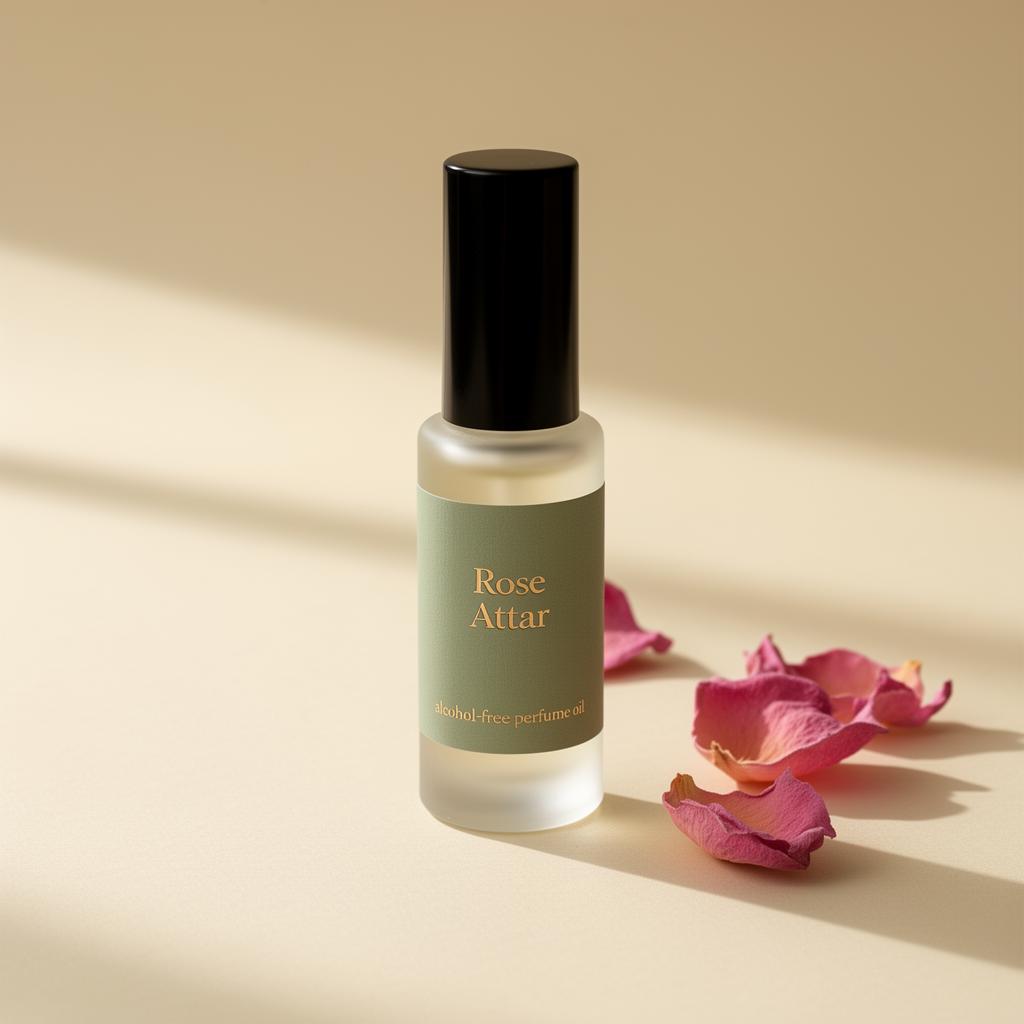
Rose has been distilled into attar in the Muslim world for over a thousand years — from Ta'if to Kannauj. A single drop of pure rose attar can replace a bottle of synthetic perfume, without exposing your body to phthalates, parabens or synthetic musks.
True attar ('itr) is a steam- or hydro-distilled aromatic oil, usually carried in sandalwood or jojoba oil. No alcohol, no synthetic fixatives, no "fragrance" hiding 30 unlisted chemicals. It's the original clean perfume.
Most commercial perfumes list "parfum" or "fragrance" — a legal loophole hiding endocrine-disrupting chemicals. For Muslim women and women who value modesty who wear scent under modest clothing and reapply daily, exposure is compounded. We've written a full guide on this:
- Ingredients list: just Rosa damascena oil + a carrier (sandalwood or jojoba)
- No alcohol, no "fragrance", no "parfum"
- Sold in small bottles (5–12ml) — real attar is precious
- Scent develops on the skin over hours, doesn't blast and fade
- Origin stated: Ta'if (Saudi), Isparta (Turkey) or Kannauj (India)
Apply one drop to pulse points after wudu — wrists, behind ears, base of throat. The warmth of your body releases the scent slowly across the day. A single bottle lasts months.
Sources & further reading
Every claim in this article is traced to either an authentic Islamic source or peer-reviewed research and public health guidance.
Islamic sources
Science & clinical research
- 2.Zota AR et al., "Phthalate exposure from personal care products and endocrine outcomes in reproductive-age women", Environ Health Perspect.
- 3.Hongratanaworakit T — "Relaxing effect of rose oil on humans" (autonomic and mood measures), Nat Prod Commun 2009.
- 4.Mohebitabar S et al., "Therapeutic efficacy of rose oil: a comprehensive review", Avicenna J Phytomed 2017.
- 5.European Commission SCCS — opinions on fragrance allergens and phthalates in cosmetics.
- 6.Reviews on synthetic musks, diethyl phthalate and endocrine activity.
Medical disclaimer: Welliyah articles are for general education and reflect Islamic wellness principles. They are not a substitute for personal medical advice. Always speak with a qualified clinician about your individual health, medication, pregnancy, or treatment decisions.