
Modest Fitness & Lifestyle
Modest Activewear — Beyond Just Coverage
Why fabric, fit and breathability matter as much as modesty for women who train.
Help Review Welliyah Articles
We welcome qualified female healthcare professionals and Islamic educators to contribute to and review Welliyah content.
Interested in becoming a reviewer?
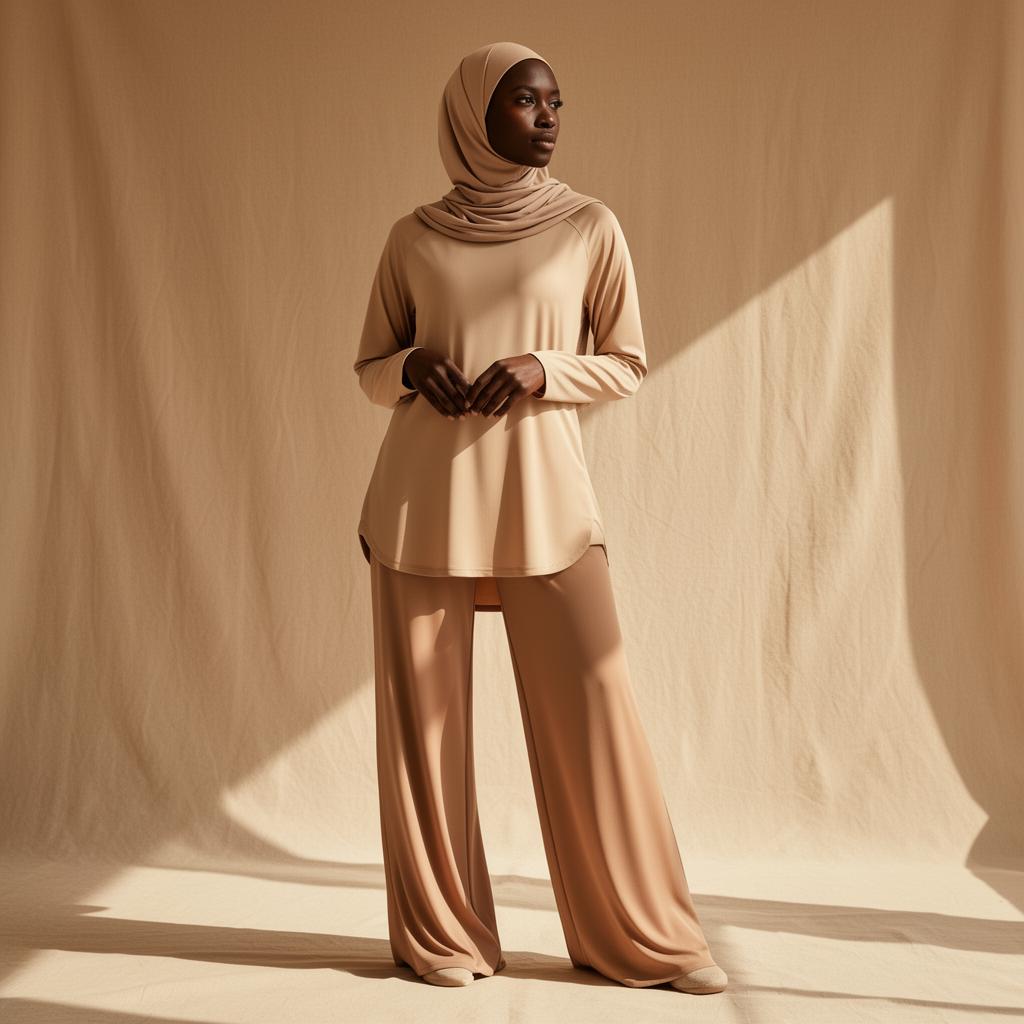
"Modest" should never mean "uncomfortable". The right activewear lets you move freely, stays dry, doesn't cling when wet, and respects your satr. Here's what to look for — and what to avoid.
- Cover loosely from shoulders to ankles, including when bending and stretching
- Wick sweat away rather than trap it against the skin
- Stay opaque when wet (the cheap-fabric test most fail)
- Allow full range of motion for prayer, lifting, and cardio
- Include a proper sports underlayer for support
Many activewear synthetics are treated with PFAS ("forever chemicals") and antimicrobial coatings linked to hormone disruption. When you sweat, your skin absorbs more. Look for:
- Bamboo, modal, or technical cotton blends for inner layers
- Recycled polyester for outer layers (lower PFAS risk than virgin)
- OEKO-TEX or bluesign certified — verified low chemical content
- Avoid: "stain-proof", "antimicrobial silver" coatings unless certified safe
- Base layer: sports bra + fitted long-sleeve top
- Mid layer: loose tunic or longline top covering hips
- Bottom: wide-leg trousers or fitted leggings + loose overlay
- Add a lightweight sports hijab — moisture-wicking, no pins needed
Sources & further reading
Every claim in this article is traced to either an authentic Islamic source or peer-reviewed research and public health guidance.
Islamic sources
Science & clinical research
- 2.Xia C et al., "Per- and polyfluoroalkyl substances (PFAS) in textiles and consumer apparel", Environ Sci Technol 2022.
- 3.Daley AJ et al., "Exercise for premenstrual syndrome: a systematic review", and BJSM reviews on exercise and menstrual symptoms.
- 4.Gavin TP — "Clothing and thermoregulation during exercise", Sports Medicine 2003.
- 5.Studies on moisture-wicking fabrics, sweat evaporation and skin comfort during exercise.
- 6.UK Sport England — "Reframing sport for teenage girls" (barriers to participation including clothing and privacy).
- 7.NHS — Physical activity guidelines for adults.
Medical disclaimer: Welliyah articles are for general education and reflect Islamic wellness principles. They are not a substitute for personal medical advice. Always speak with a qualified clinician about your individual health, medication, pregnancy, or treatment decisions.