
Sunnah Nutrition
How to Choose the Best Black Seed Oil — Why Hexane-Free & Cold-Pressed Matters
The Prophet ﷺ called it a cure for every disease except death. Here's how to honour that gift with quality you can trust.
Help Review Welliyah Articles
We welcome qualified female healthcare professionals and Islamic educators to contribute to and review Welliyah content.
Interested in becoming a reviewer?
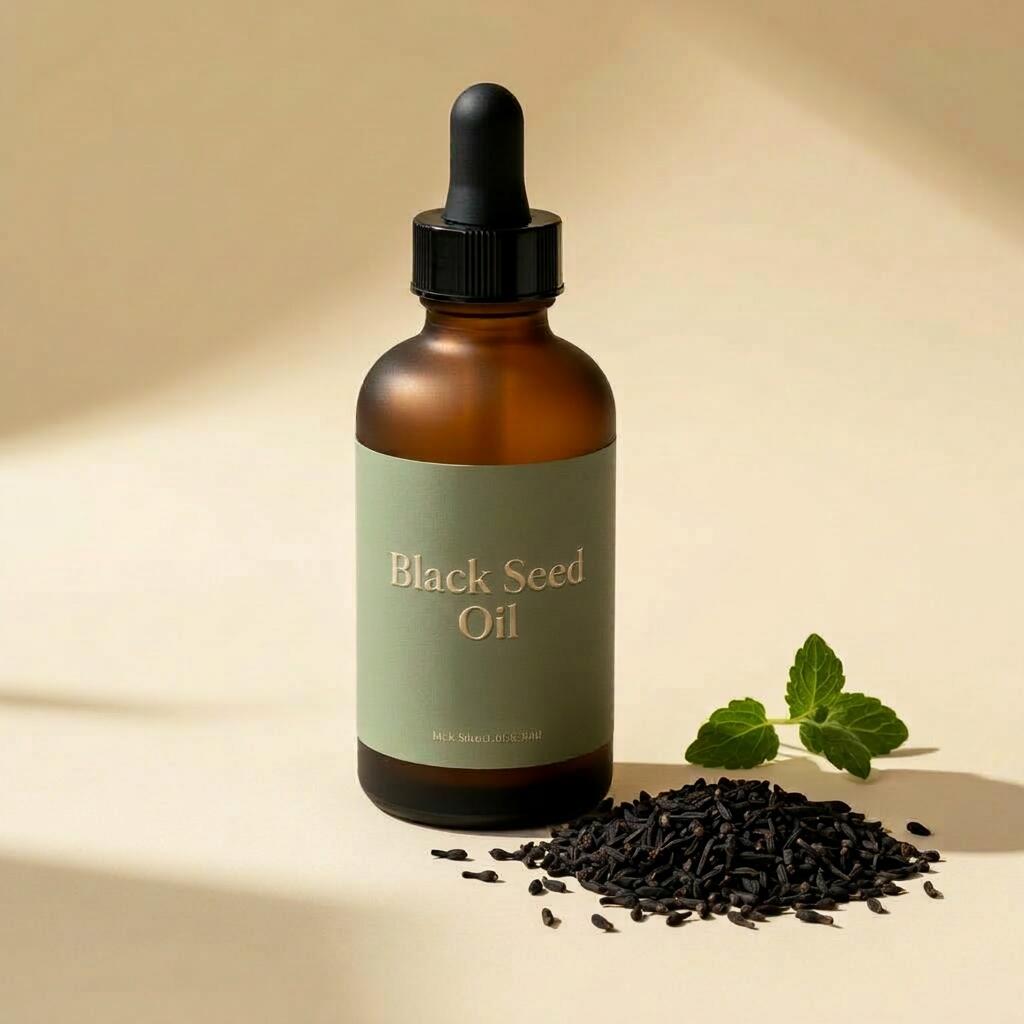
Black seed oil (habbat al-sawda, Nigella sativa) is one of the most celebrated remedies in Islamic tradition. But supermarket shelves are full of low-grade, solvent-extracted versions stripped of the very compounds that make it powerful. This guide shows you how to choose oil that actually works.
The Prophet Muhammad ﷺ said: "In the black seed is healing for every disease, except death." (Sahih al-Bukhari 5688). Classical scholars like Ibn al-Qayyim in At-Tibb an-Nabawi (Prophetic Medicine) describe it as a warming, drying remedy for chest congestion, digestion, and immunity — to be taken with honey or warm water.
Most cheap black seed oils are extracted using hexane, a petroleum-derived solvent. It pulls more oil from the seed at lower cost, but trace residues remain and the heat involved destroys delicate compounds. Hexane is a recognised neurotoxin. Always look for "hexane-free" or "solvent-free" on the label.
The active compound in black seed is thymoquinone — responsible for most of its anti-inflammatory, antioxidant and immune-modulating effects. Thymoquinone breaks down above ~40°C. Cold-pressed (sometimes called "first press" or "virgin") means the seeds are crushed mechanically without heat, preserving thymoquinone levels.
- Look for: thymoquinone content listed (1.5–3% is excellent)
- Avoid: "refined", "deodorised", or oils with no extraction method stated
- Bottle: dark glass only — light degrades the oil
Ethiopian and Egyptian Nigella sativa seeds consistently test highest for thymoquinone. Indian and Turkish varieties are also reputable. Cheap blends often mix species (Nigella damascena is not the same plant).
- 100% pure Nigella sativa — single ingredient
- Cold-pressed, hexane-free, unrefined
- Dark glass bottle
- Thymoquinone % on the label or third-party tested
- Sourced from Ethiopia, Egypt or trusted single-origin farm
- Strong peppery taste — if it's mild and bland, it's poor quality
The traditional dose is one teaspoon a day, ideally on an empty stomach, mixed with a teaspoon of raw honey or warm water with lemon. Start with half a teaspoon if you're new — the taste is intense. Pregnant women should consult a clinician before use.
When you choose well, a single bottle of black seed oil is a daily ritual — a small act that connects modern science to a tradition over a thousand years old.
Sources & further reading
Every claim in this article is traced to either an authentic Islamic source or peer-reviewed research and public health guidance.
Science & clinical research
Medical disclaimer: Welliyah articles are for general education and reflect Islamic wellness principles. They are not a substitute for personal medical advice. Always speak with a qualified clinician about your individual health, medication, pregnancy, or treatment decisions.