
Sunnah Nutrition
Why Halal Bone Broth Belongs in Your Daily Ritual
A nourishing drink the Sunnah encouraged — and modern science is finally catching up to.
Help Review Welliyah Articles
We welcome qualified female healthcare professionals and Islamic educators to contribute to and review Welliyah content.
Interested in becoming a reviewer?
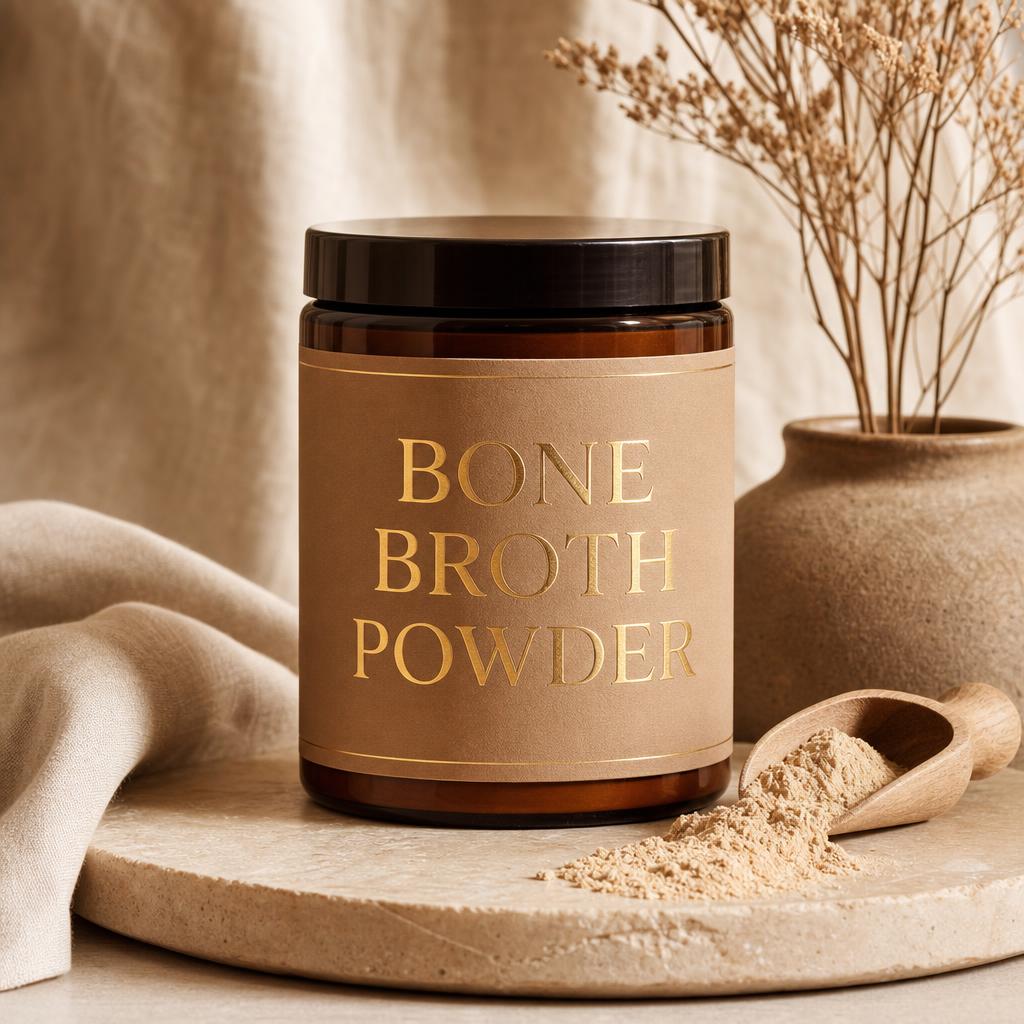
Bone broth is one of the oldest foods on earth — and the Prophet ﷺ is reported to have loved tharid, a meat and bread broth dish. Today, slow-simmered bone broth is one of the most powerful tools for gut healing, skin elasticity and postpartum recovery.
- Collagen & gelatin — supports skin, hair, nails and joint cartilage
- Glycine & proline — amino acids that calm the nervous system and rebuild the gut lining
- Glutamine — fuel for intestinal cells, helpful for leaky gut and IBS
- Bioavailable minerals — calcium, magnesium, phosphorus, potassium
Bones absorb everything the animal was fed and exposed to. Conventional bone broth often comes from factory-farmed animals raised on antibiotics and low-quality feed. Halal, grass-fed bones from ethically slaughtered animals give you cleaner minerals, a better fatty acid profile, and align with Islamic principles of tayyib (pure, wholesome).
Homemade broth simmered for 24+ hours is ideal — but few of us have time. A high-quality bone broth powder gives you the same nutrients in 30 seconds. Look for: single-ingredient (just bone broth), grass-fed and halal-certified, no maltodextrin or "natural flavours", and at least 9g protein per scoop.
- Stir one scoop into hot water as a morning drink
- Add to soups, stews and rice cooking water for hidden nourishment
- Use in postnatal recovery — traditional cultures fed broth daily for the first 40 days
- Sip after fasting in Ramadan to gently rebuild electrolytes
Sources & further reading
Every claim in this article is traced to either an authentic Islamic source or peer-reviewed research and public health guidance.
Science & clinical research
- 2.Zdzieblik D et al., "Collagen peptide supplementation in combination with resistance training" and collagen peptide trials on skin elasticity and joint comfort.
- 3.Bannai M & Kawai N, "New therapeutic strategy for amino acid medicine: glycine improves sleep quality", J Pharmacol Sci 2012.
- 4.Hsu D et al., "Essential and toxic metals in animal bone broths", Food Nutr Res 2017 (mineral and amino acid content of broth).
- 5.Paul C et al., "Significant amounts of functional collagen peptides can be incorporated in the diet", Nutrients 2019.
- 6.Rennard BO et al., "Chicken soup inhibits neutrophil chemotaxis in vitro", Chest 2000.
- 7.Glycine, proline and gut barrier function — reviews of amino acid roles in intestinal mucosa repair.
- 8.NHS — Protein and a balanced diet.
Medical disclaimer: Welliyah articles are for general education and reflect Islamic wellness principles. They are not a substitute for personal medical advice. Always speak with a qualified clinician about your individual health, medication, pregnancy, or treatment decisions.